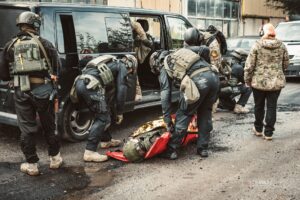
TCCC – Tactical Combat Casualty Care (3 days)
Gain practical lifesaving skills based on TCCC standards — learn to operate under fire, during evacuation, and under high stress. The course follows the Committee on Tactical Combat Casualty Care guidelines.
Key information.
Course: TCCC – Care of the wounded in tactical operations
Duration: 3 days
Target group: uniformed services, operators, paramilitary groups, trained civilians
Location: nationwide (Poland)
Certificate: yes, compliant with current regulations
Dates: contact us for availability
Price: contact us for a quote
Choose your course.
Sign up for training.

For services, paramilitary groups, and enthusiasts.
TCCC – A 3-day course for those who want more
A realistic medical training conducted in combat conditions. TCCC is the international standard for battlefield casualty care.
Why choose the 3-day TCCC course?
The TCCC (Tactical Combat Casualty Care) course prepares participants to operate in the most extreme conditions — under fire, in the field, with limited resources and time.
We teach effective action across three phases of care: Care Under Fire (CUF), Tactical Field Care (TFC), and TACEVAC. The course combines intensive theory, practice, simulations, and combat scenarios using medical and tactical equipment.
Course based on current TCCC guidelines
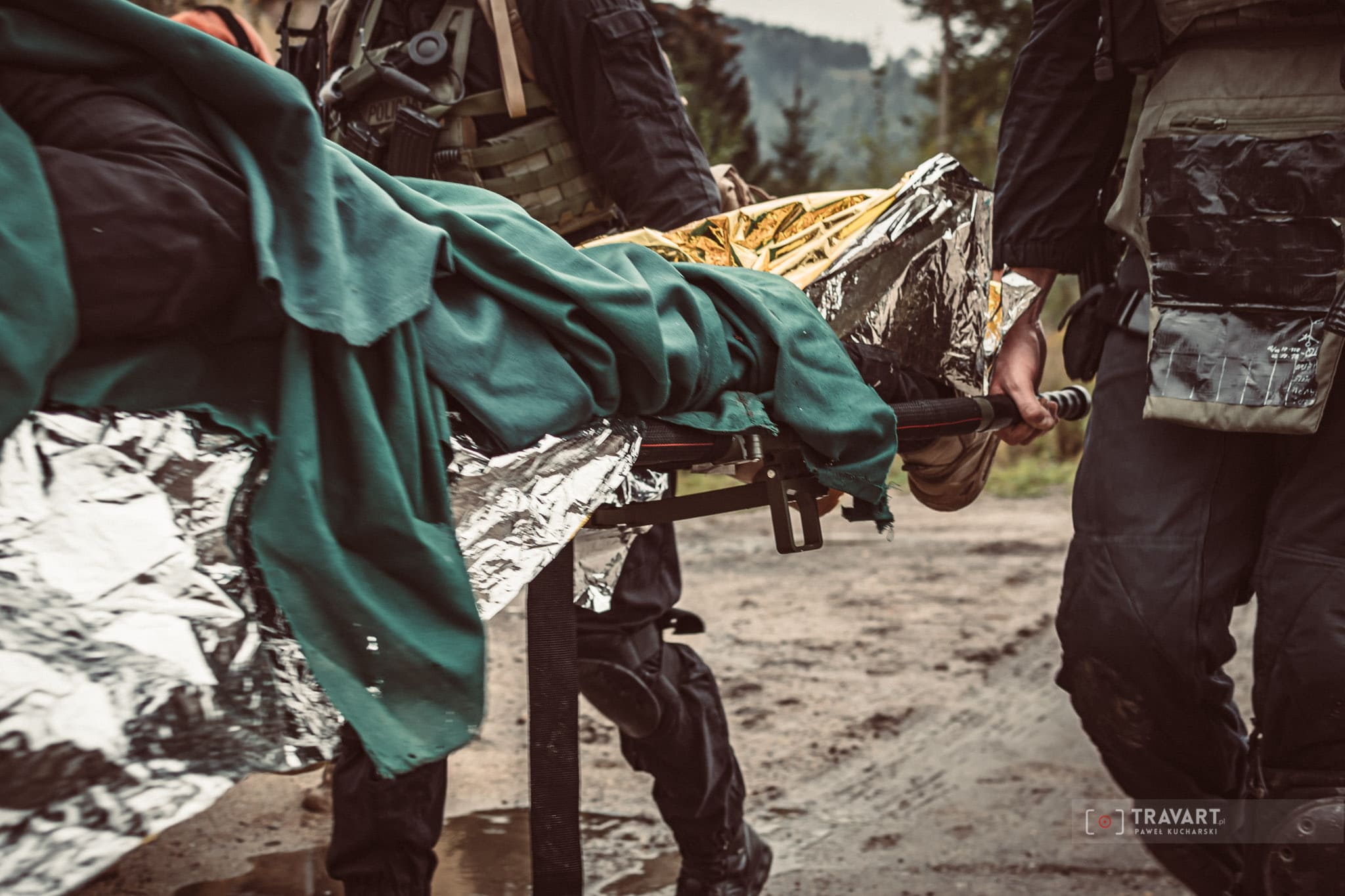
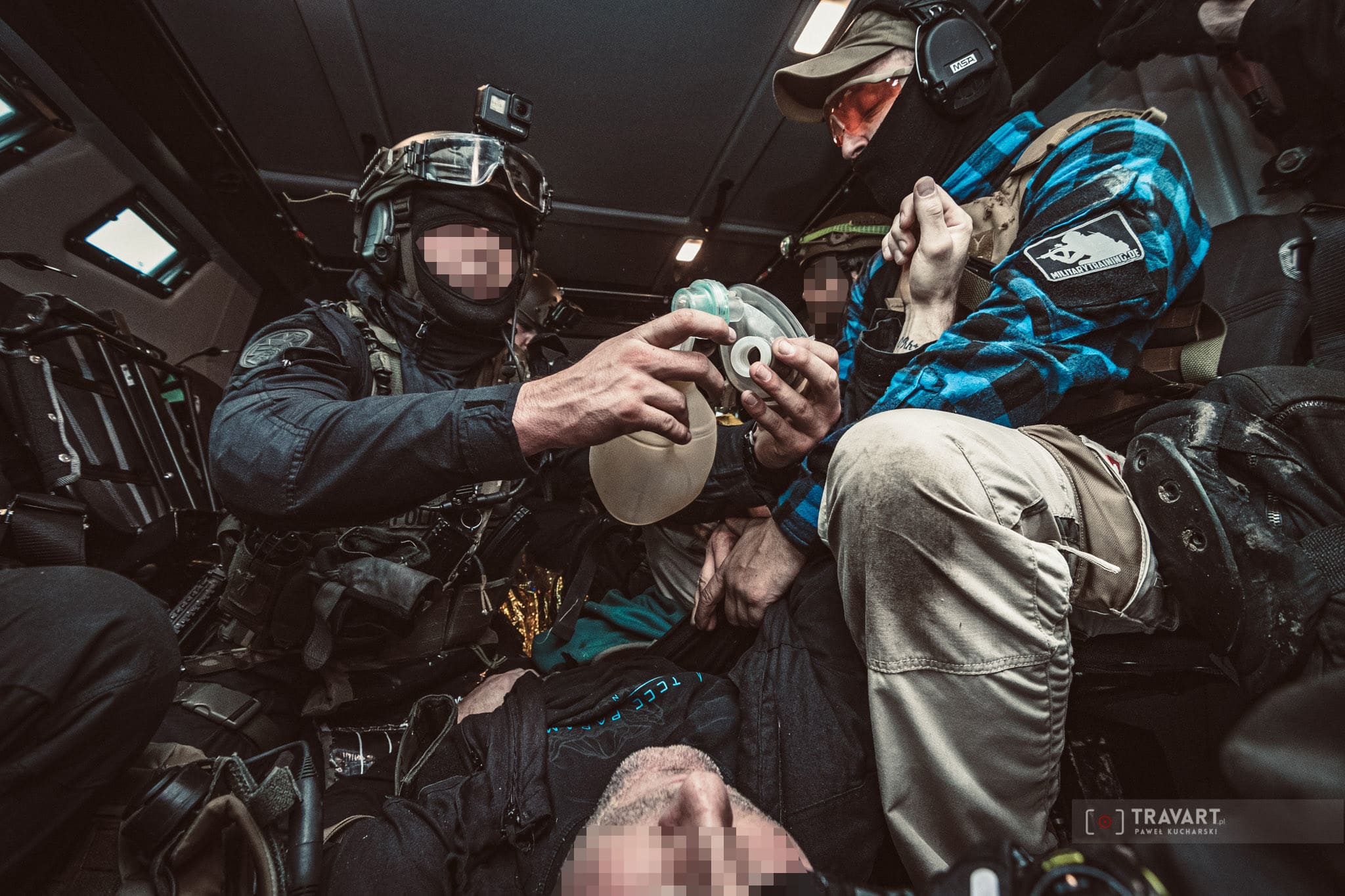
Combat simulations using dressings, evacuation, and equipment
Medical knowledge and practical M.A.R.C.H. protocols
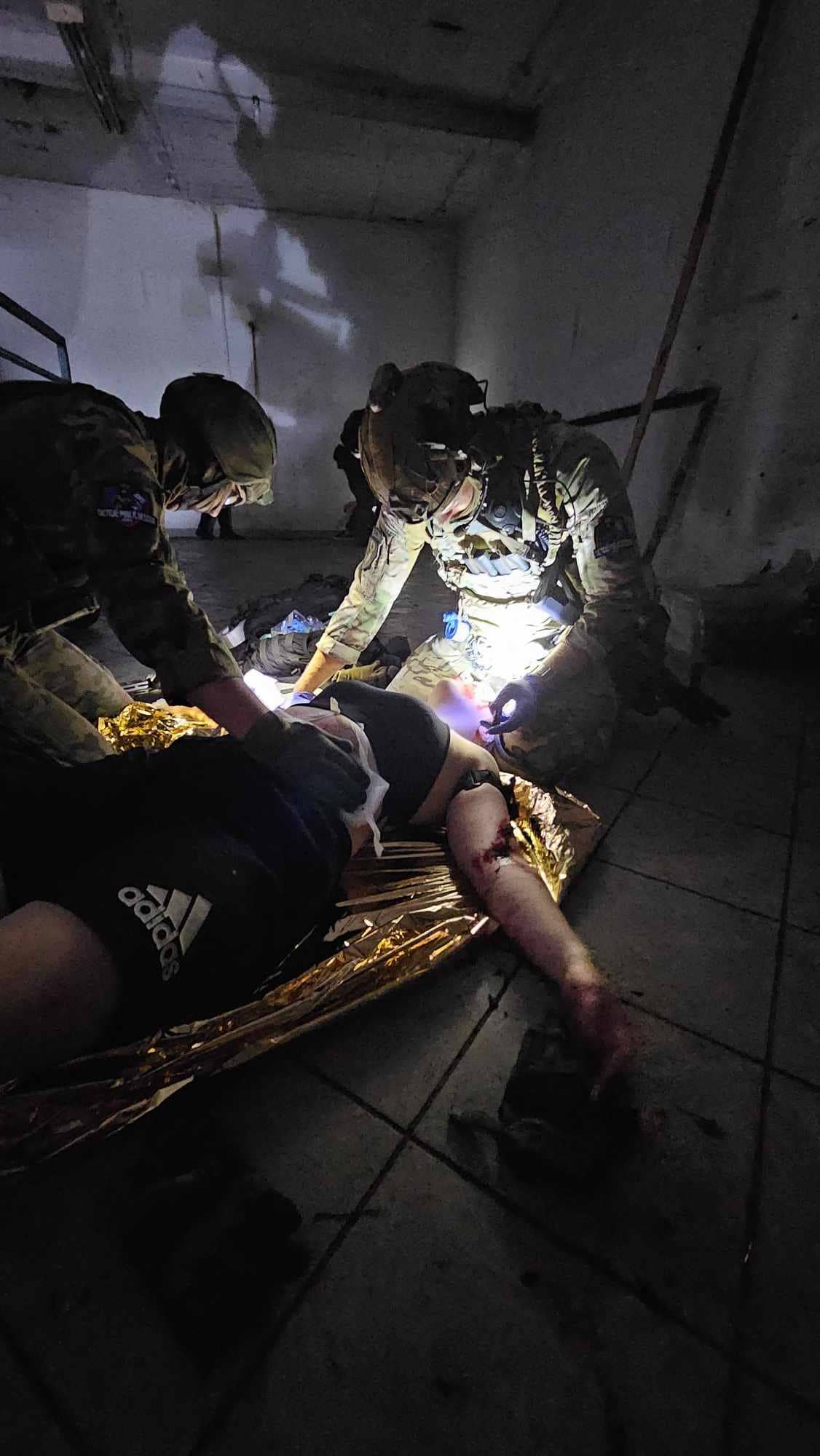
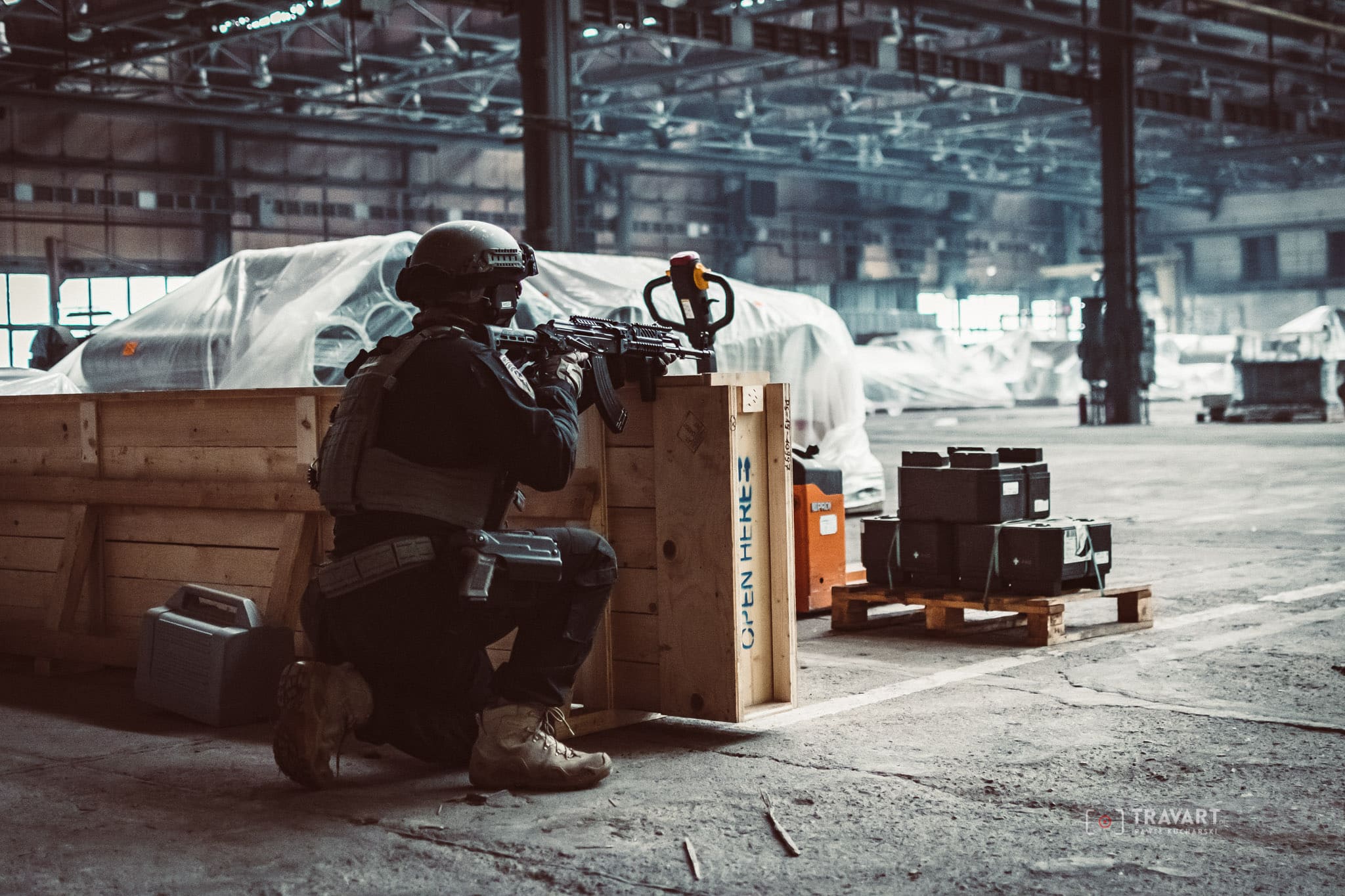
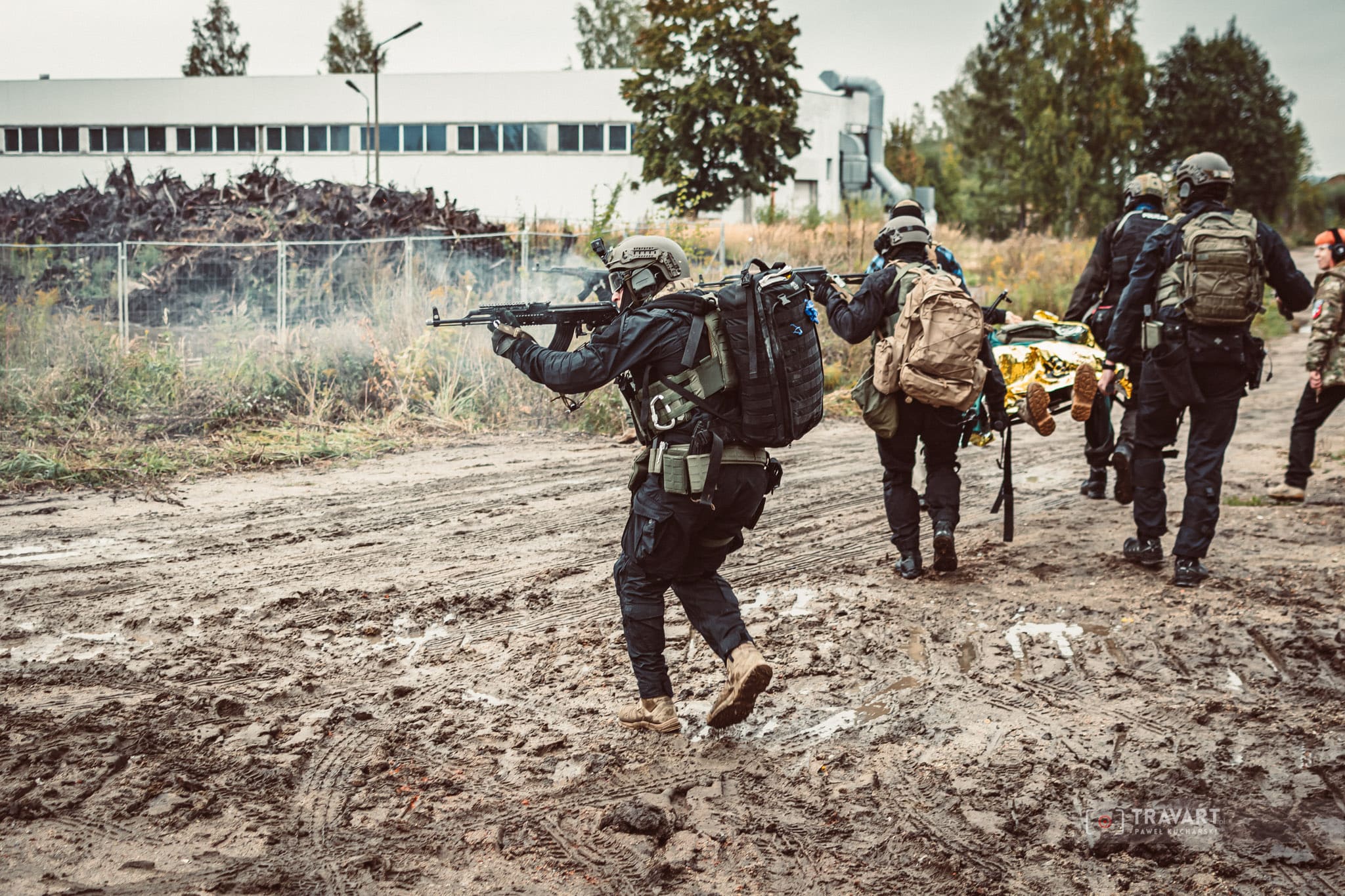
High realism — stress, shouting, smoke, simulated injuries
Instructors with military experience
How does the training work step by step?
Tactical first aid training under TCCC guidelines is not a lecture — it’s intensive drills and simulations conducted in realistic combat conditions. From the first minutes to the exam, each participant operates under pressure, in full gear, with real situational stress.
Phase I — Care Under Fire
Threat identification and aid under fire. Casualty evacuation, tourniquets, securing the area.
Phase II — Tactical Field Care
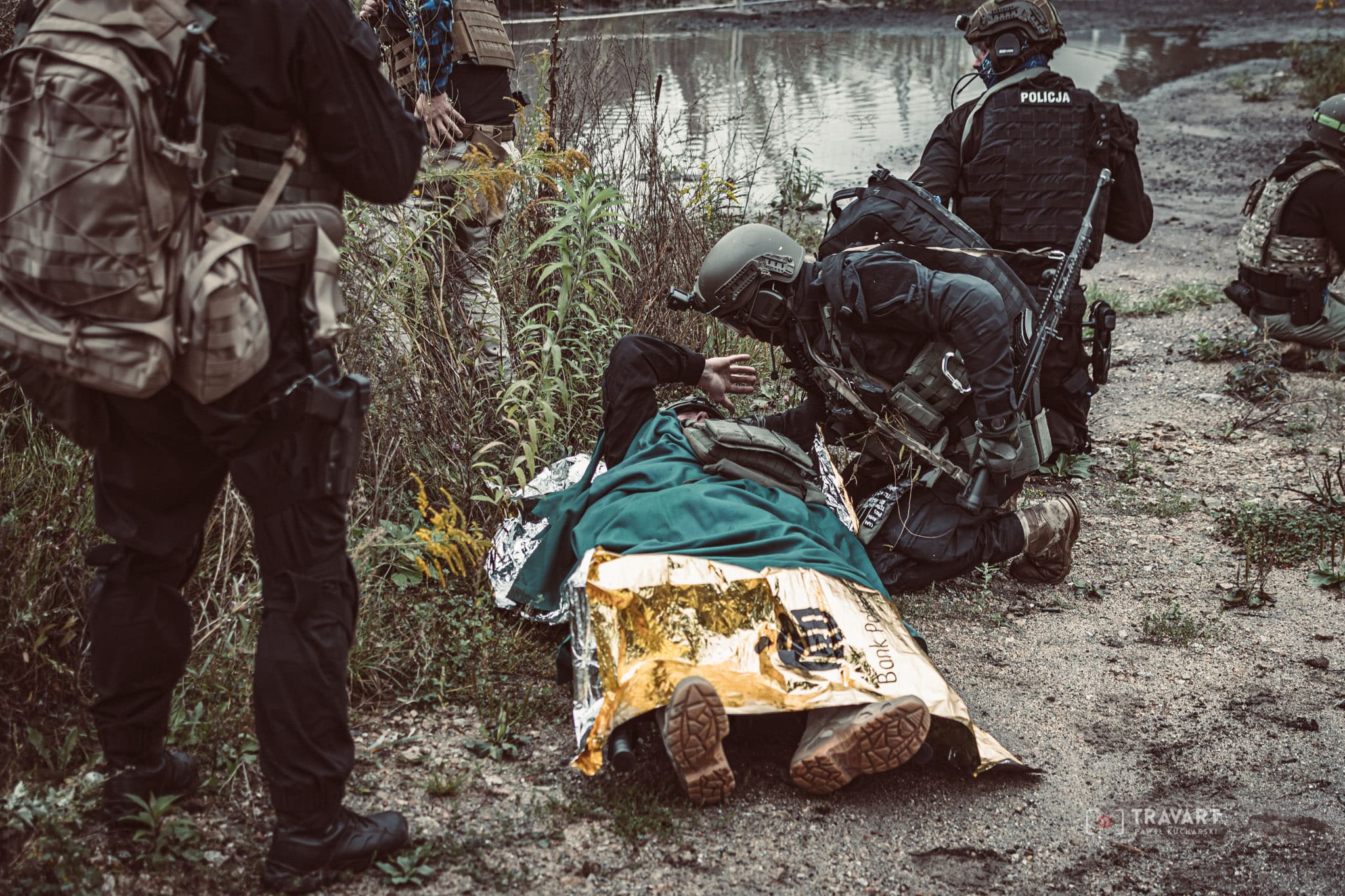
M.A.R.C.H. protocol, massive hemorrhage control, airway management, hypothermia prevention, mental status assessment, head injuries.
Phase III — TACEVAC
Medical evacuation principles, 9-line report, MIST documentation, in-vehicle care.
Final scenarios + Exam
Combined scenarios in full kit, combat stress, and dynamic decision-making.
What will you learn in this course?
After completing the course, participants will be able to:
Act according to TCCC phases (CUF, TFC, TACEVAC)
Apply C.A.T./SOFTT tourniquets and control massive hemorrhage
Maintain airway patency (NPA, cricothyrotomy)
Manage chest wounds and prevent hypothermia
Recognize shock and operate in high-threat environments
Transmit M.I.S.T. reports and execute a 9-line MEDEVAC
Training Program
Day 1 — Care Under Fire
History and introduction to TCCC
Preventable causes of death on the battlefield
Phases and levels of care
Theory + practice: evacuation methods under fire
C.A.T. and SOFTT tourniquets — techniques and effectiveness
CUF tactical scenarios
Day 2 — Tactical Field Care
M.A.R.C.H. protocol — introduction
Massive hemorrhage (tourniquets, wound packing, dressings)
Airway — NPA, emergency cric
Breathing, AVPU, shock assessment
Hypothermia prevention, head injuries
TFC tactical scenarios
Day 3 — TACEVAC + exam
Burns, the rule of nines, musculoskeletal injuries
Evacuation — TacEvac, medical documentation
9-line report, M.I.S.T.
Final scenarios — combining phases
Final exam
Frequently Asked Questions.
You can register via the form on our website, by phone, or by email. We also organize closed courses for companies.
Yes — we follow the current recommendations of the Committee on TCCC.
For uniformed services, rescue groups, battlefield medics, and experienced civilians.
No, but prior first aid or EMT-first responder training is recommended.
Yes — most drills take place in simulated tactical conditions.
No — we provide all necessary equipment for the duration of the course.
Yes, the course concludes with a practical exam.
Yes, each participant receives a certificate of completion.
The course lasts 3 days.
Yes. The price depends on the number of participants and location — contact us for a personalized quote.
Yes — we deliver on-site training across Poland.